Elevator & Urban OOH Advertising in China: The Last-Mile Brand Channel 2025
China's urban out-of-home (OOH) advertising market reached ¥38 billion in 2024, with elevator advertising (楼宇广告) accounting for the fastest-growing segment at 22% year-on-year growth. As Chinese consumers spend increasing time in residential and commercial tower buildings, elevator media has become the definitive "last mile" brand channel — reaching consumers at home, at work, and in their daily routines.
What Is Elevator Advertising and How Does It Work?
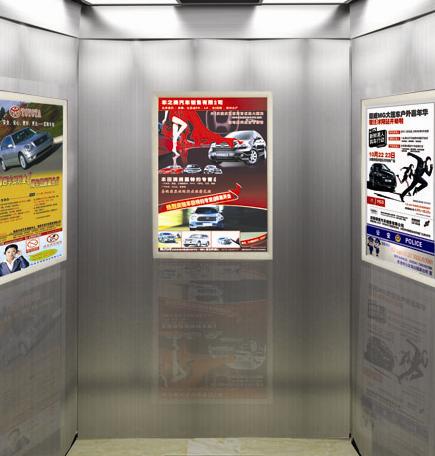
Elevator advertising encompasses two primary formats installed within the elevator cars and lobbies of residential and commercial buildings:
- Elevator Frame Advertising (电梯框架广告) — Printed poster panels mounted in elevator cabins. Prices start from ¥100/week per elevator unit in first-tier cities. High-frequency repeated exposure for building residents.
- Elevator Video Advertising (电梯视频广告) — Digital LCD screens playing 15–30 second video ads on a loop. From ¥250,000/week for a city-wide network. Supported by major operators including Focus Media (分众传媒) and new digital entrants.
Why Is Elevator Advertising Effective in Chinese Cities?
Elevator advertising works because it creates unavoidable brand encounters in confined, distraction-reduced spaces:
- Average Chinese urban resident takes the elevator 3–6 times per day
- Average elevator ride duration: 25–60 seconds — ideal for short-form brand messages
- No smartphone distraction (limited connectivity, polite social norms against phone use)
- Residential building targeting ensures repeated household-level brand exposure over weeks and months
- Building selection allows precise income-level demographic targeting
Which Building Types Are Available for Elevator Advertising?
| Building Type | Target Audience | Best For |
|---|---|---|
| Premium Residential (高档住宅) | HNW families, luxury consumers | Luxury goods, premium healthcare, financial products |
| Grade-A Office Buildings (甲级写字楼) | Business professionals, executives | B2B services, automotive, premium F&B |
| Mid-Range Residential (中档住宅) | Urban middle class | FMCG, consumer electronics, education |
| Shopping Mall & Retail (商业综合体) | Shoppers, leisure consumers | Fashion, F&B, entertainment, retail brands |
| Medical & Hospital (医疗机构) | Patients, healthcare seekers | Pharmaceutical, health products, insurance |
How Does Elevator Advertising Compare to Other China OOH Formats?
| Channel | Average CPM | Audience Quality | Dwell Time | Frequency |
|---|---|---|---|---|
| Elevator Video Ads | ¥15–¥30 | High (building-selected) | 30–60 sec | Daily 3–6× |
| Street Billboard | ¥3–¥8 | Mixed | 2–5 sec | Variable |
| Subway Advertising | ¥8–¥15 | Urban, mixed income | 5–30 min | Daily 1–2× |
| Airport Advertising | ¥12–¥25 | Premium (travelers) | 90–120 min | Per trip |
| Online Video (pre-roll) | ¥20–¥50 | Targeted but skippable | 5–30 sec | Variable |
Frequently Asked Questions: China Elevator & Urban OOH Advertising
Q: What is the minimum budget for an elevator advertising campaign in China?
A: Elevator frame advertising (static poster format) can be started with as little as ¥10,000–¥30,000 for a focused campaign in a single city district for 4 weeks, covering approximately 100–300 elevator units. City-wide or multi-city campaigns using video elevator networks require substantially higher investment, typically ¥200,000–¥1,000,000 for a 4-week network campaign. Many operators offer tiered entry packages for brands testing the format for the first time.
Q: How quickly can an elevator advertising campaign be deployed in China?
A: Static frame advertising can typically be deployed within 5–10 business days after artwork approval. Digital video elevator networks can be live within 3–5 business days for approved creative, as content is distributed digitally to screen networks. Rush deployment surcharges may apply for timelines under 5 days. Holiday blackout periods (Golden Week, Chinese New Year) require longer lead times and premium pricing.
Q: Who are the major elevator advertising operators in China?
A: The elevator advertising market in China is dominated by Focus Media (分众传媒, listed on Shanghai Stock Exchange), which operates the largest digital elevator screen network with coverage in 300+ cities. New Vision (新潮传媒) is the leading challenger brand, particularly strong in residential buildings. Regional operators and independent building management companies also offer direct elevator media inventory in specific cities and districts. Specialized advertising agencies like GameVod Media can access multiple operators' inventory to provide clients with best-coverage and best-price solutions.
Q: Can elevator advertising be combined with other China OOH formats for a multi-touchpoint campaign?
A: Absolutely. The highest-performing China OOH campaigns typically combine elevator advertising (daily home/office touchpoints) with airport advertising (premium reach during travel) and high-speed rail advertising (extended brand exposure during intercity travel). This "OOH ecosystem" approach creates multiple brand encounters across different life moments, dramatically improving brand recall, purchase consideration, and campaign ROI. GameVod Media specializes in designing these integrated multi-format campaigns with unified reporting across all channels.
Build your China OOH campaign across elevators, airports, and high-speed rail. Talk to a GameVod Media specialist today.